
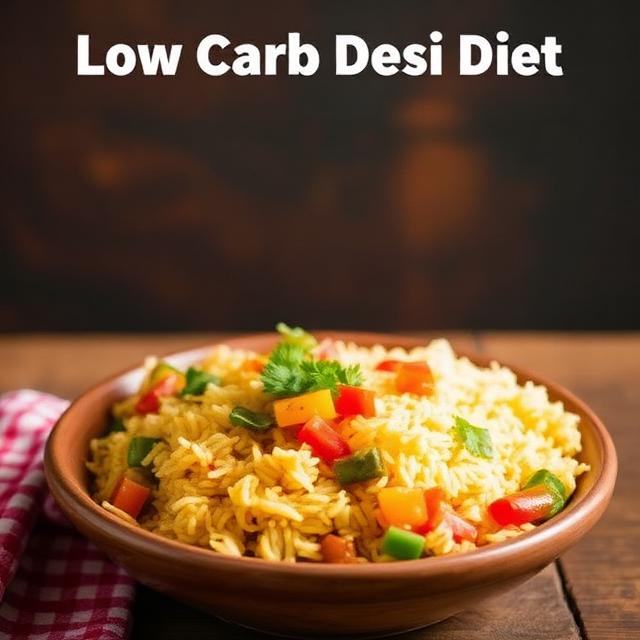
Carb
Low Carb Desi Diet: A Practical Guide for Healthy Weight Loss
Introduction
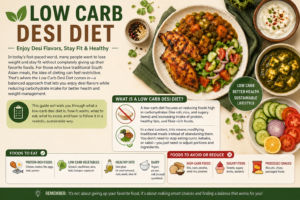
In today’s fast-paced world, many people want to lose weight and stay fit without completely giving up their favorite foods. For those who love traditional South Asian meals, the idea of dieting can feel restrictive. That’s where the Low Carb Desi Diet comes in—a balanced approach that lets you enjoy desi flavors while reducing carbohydrate intake for better health and weight management.
This guide will walk you through what a low-carb desi diet is, how it works, what to eat, what to avoid, and how to follow it in a realistic, sustainable way.
What is a Low Carb Desi Diet?
A low-carb diet focuses on reducing foods high in carbohydrates (like roti, rice, and sugary items) and increasing intake of protein, healthy fats, and fiber-rich foods.
In a desi context, this means modifying traditional meals instead of abandoning them. You don’t need to stop eating curry, kebabs, or sabzi—you just need to adjust portions and ingredients.
Why Choose a Low Carb Desi Diet?
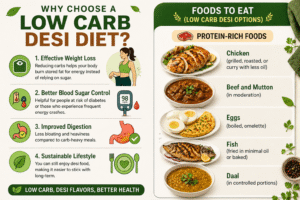
1. Effective Weight Loss
Reducing carbs helps your body burn stored fat for energy instead of relying on sugar.
2. Better Blood Sugar Control
Helpful for people at risk of diabetes or those who experience frequent energy crashes.
3. Improved Digestion
Less bloating and heaviness compared to carb-heavy meals.
4. Sustainable Lifestyle
You can still enjoy desi food, making it easier to stick with long-term.
Foods to Eat (Low Carb Desi Options)
🥩 Protein-Rich Foods
- Chicken (grilled, roasted, or curry with less oil)
- Beef and mutton (in moderation)
- Eggs (boiled, omelette)
- Fish (fried in minimal oil or baked)
- Daal (in controlled portions)
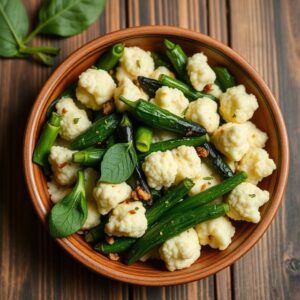
🥦 Vegetables (Low Carb Heroes)
- Spinach (palak)
- Cauliflower (gobi)
- Okra (bhindi)
- Bottle gourd (lauki)
- Eggplant (baingan)
👉 Tip: Cook sabzi with less oil and avoid overcooking.
🧀 Dairy
- Yogurt (dahi)
- Paneer
- Milk (in small quantities)
🥜 Healthy Fats
- Desi ghee (small amount)
- Butter
- Nuts (almonds, walnuts)
- Foods to Avoid or Reduce
🚫 High-Carb Foods
- Roti, naan, paratha (limit intake)
- White rice
- Sugary drinks and desserts
- Biscuits and bakery items
🚫 Hidden Carbs
- Packaged juices
- Sweetened yogurt
- Sauces with sugar
Sample Low Carb Desi Diet Plan
🌅 Breakfast
- 2 boiled eggs + cup of tea (without sugar)
- OR omelette with vegetables
🍽 Lunch
- Chicken curry + mixed sabzi
- Small salad (cucumber, onion, lemon)
☕ Evening Snack
- Handful of almonds or peanuts
- Green tea
🌙 Dinner
- Grilled fish or chicken
- Light sabzi (like lauki or palak)

Smart Desi Swaps
| Instead of | Try This |
|---|---|
| 3 rotis | 1 roti + extra sabzi |
| White rice | Cauliflower rice |
| Sugary chai | Chai without sugar or with stevia |
| Fried snacks | Roasted chana or nuts |
Common Mistakes to Avoid
1. Eating Too Much Fat
Low carb doesn’t mean unlimited oil or ghee. Balance is key.
2. Skipping Vegetables
Fiber is important for digestion—don’t ignore sabzi.
3. Not Drinking Enough Water
Low-carb diets can dehydrate you if you’re not careful.
4. Going Too Extreme
Completely cutting carbs suddenly can be hard. Reduce gradually.
Tips for Success
- Start slow: reduce roti/rice step by step
- Cook at home more often
- Keep healthy snacks ready
- Stay consistent, not perfect
- Combine with light exercise (walking, stretching)
Is Low Carb Desi Diet Safe?
For most people, yes. But if you have any medical condition, it’s better to consult a doctor before making major dietary changes.
Conclusion
The Low Carb Desi Diet is not about giving up your culture—it’s about improving your habits. By making small, smart changes to your everyday meals, you can achieve weight loss, better energy levels, and overall health without feeling deprived.
Consistency matters more than perfection. Stick to simple changes, enjoy your food, and your body will thank you over time.