
How Diabetes Affects Your Weight Diabetes is a chronic condition that affects how your body uses sugar (glucose) for energy. One of the most noticeable—and often confusing—effects of diabetes is its impact on body weight. Some people gain weight, while others lose it unexpectedly. Understanding why this happens can help you manage your health more effectively. How Diabetes Affects Your Weight
What Is Diabetes? How Diabetes Affects Your Weight
Diabetes occurs when your body either doesn’t produce enough insulin or cannot use it properly. Insulin is the hormone responsible for helping glucose enter your cells to be used as energy. How Diabetes Affects Your Weight
There are two main types:
- Type 1 Diabetes – The body does not produce insulin.
- Type 2 Diabetes – The body becomes resistant to insulin or doesn’t use it effectively. How Diabetes Affects Your Weight
The Connection Between Diabetes and Weight
Weight and diabetes are closely linked. In fact, body weight can both influence and be influenced by diabetes.
1. Weight Gain and Type 2 Diabetes
Many people with Type 2 diabetes struggle with weight gain. This happens for several reasons: How Diabetes Affects Your Weight
Insulin Resistance
When your body becomes resistant to insulin, your pancreas produces more of it. High insulin levels can lead to fat storage, especially around the belly.
Increased Hunger
High or unstable blood sugar levels can make you feel hungry more often, leading to overeating. How Diabetes Affects Your Weight
Medications
Some diabetes medications, especially insulin therapy, can cause weight gain as they help your body store more glucose.

2. Weight Loss and Diabetes
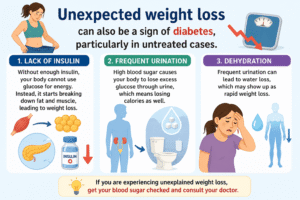
Unexpected weight loss can also be a sign of diabetes, particularly in untreated cases. How Diabetes Affects Your Weight
Lack of Insulin
Without enough insulin, your body cannot use glucose for energy. Instead, it starts breaking down fat and muscle, leading to weight loss.
Frequent Urination
High blood sugar causes your body to lose excess glucose through urine, which means losing calories as well.
Dehydration
Frequent urination can lead to water loss, which may show up as rapid weight loss.
How Type 1 Diabetes Affects Weight
People with Type 1 diabetes often experience weight loss before diagnosis. This is because their body lacks insulin completely, forcing it to burn fat and muscle for energy. How Diabetes Affects Your Weight
Once insulin treatment begins, weight may stabilize or even increase as the body starts using glucose properly again.
How Type 2 Diabetes Affects Weight
Type 2 diabetes is often associated with being overweight or obese, but not always.
- Many individuals gain weight due to insulin resistance.
- Others may lose weight if their diabetes is uncontrolled.
The relationship is complex and varies from person to person.
Can Weight Loss Improve Diabetes?
Yes—weight loss is one of the most effective ways to manage Type 2 diabetes.
Benefits of Losing Weight:
- Improves insulin sensitivity
- Lowers blood sugar levels
- Reduces the need for medication
- Decreases risk of complications
Even losing 5–10% of your body weight can make a significant difference.
Tips for Managing Weight with Diabetes
1. Follow a Balanced Diet
Focus on whole foods like:
- Vegetables
- Whole grains
- Lean proteins
- Healthy fats
Avoid excessive sugar and refined carbs.
2. Stay Physically Active
Regular exercise helps:
- Burn calories
- Improve insulin sensitivity
- Maintain a healthy weight
Aim for at least 30 minutes of activity most days.
3. Monitor Blood Sugar Levels
Keeping track of your glucose levels helps you understand how food and activity affect your body.
4. Take Medications as Prescribed
Always follow your doctor’s advice regarding insulin or other medications.
5. Get Enough Sleep
Poor sleep can affect hormones that control hunger and weight.
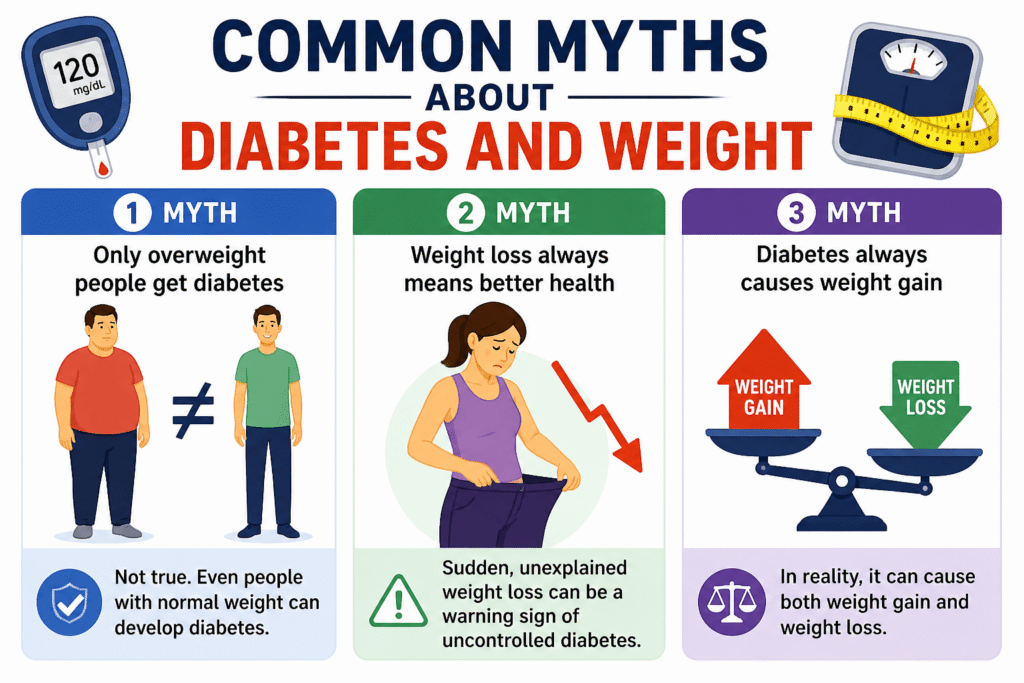
Common Myths About Diabetes and Weight
Myth 1: Only overweight people get diabetes
Not true. Even people with normal weight can develop diabetes.
Myth 2: Weight loss always means better health
Sudden, unexplained weight loss can be a warning sign of uncontrolled diabetes.
Myth 3: Diabetes always causes weight gain
In reality, it can cause both weight gain and weight loss.
Final Thoughts
Diabetes and weight are deeply connected, but the relationship is not always straightforward. While Type 2 diabetes is often linked to weight gain, uncontrolled diabetes can lead to weight loss. The key is balance—through proper diet, regular exercise, and consistent medical care.
Managing your weight is not just about appearance—it’s a crucial step in controlling diabetes and improving your overall quality of life.